


The Setup
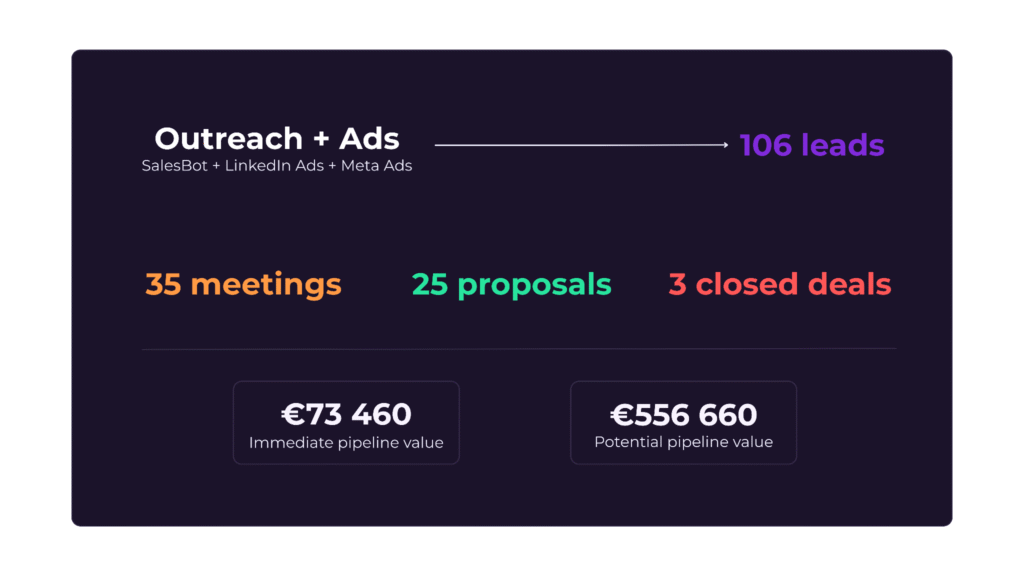
Over two months, we ran two simultaneous campaigns aimed at an audience notorious for their deep skepticism: industrial B2B decision-makers. The first campaign utilized automated LinkedIn outreach via Salesbot, while the second deployed paid ads across both LinkedIn and Meta.
The goal of these campaigns was to generate highly qualified leads that would turn into actual meetings, closed deals, and new clients for our own agency. We intentionally avoided the usual vanity metrics such as likes, shares, or vague brand awareness, as we have a habit of measuring success in closed contracts rather than digital applause.
The Numbers
There is always a tiny bit of finger-crossing involved in lead gen, but you need a lot less luck when the strategy is actually sound.
- The outreach campaign delivered 54 sales-qualified leads.
- The paid ad campaigns brought in 52 additional sales-qualified leads, with 32 originating from LinkedIn and 20 from Meta.
When you look at the compound impact, those 106 leads resulted in:
- 35 booked meetings,
- 3 closed deals worth €73,460,
- and 25 active proposals representing €556,660 in pipeline value.
Because this is a long-cycle B2B market, immediate closures are only half the story. A significant portion of potential revenue is currently moving through the pipeline.
What Made the Difference
Three strategic choices separated this project from typical, forgettable lead generation efforts.
- Precision and multi-step visibility
On the outreach front, we abandoned the hope that a single message would magically work, opting instead for a deliberate three-step approach. We started with a free InMail where available, followed it with a formal connection request and message, and then sent a paid InMail through Sales Navigator if the previous steps were ignored. This sequence gave prospects three distinct opportunities to notice us, effectively tripling our reach while remaining entirely professional and respectful.
As for the ads, we used both LinkedIn and Meta. Most B2B marketers limit themselves to LinkedIn because it feels safe, completely missing the fact that factory directors scroll Meta platforms too. Especially when you scale your campaigns with the right targeting, the payoff is undeniable: Meta kept pace by delivering 20 qualified leads right alongside LinkedIn’s 32.
- No-friction conversion process
We have a strict rule against wasting a prospect’s time, so we removed every digital roadblock we could find. For the ads, that meant using native forms so users never had to leave the app; for outreach, it meant skipping the generic automated sequences in favor of a straight-to-the-point conversation. The result? We actually kept prospects’ attention long enough to get them to the finish line.
- Value built into every touchpoint
Instead of feeding the internet more generic B2B noise, we built the entire campaign around immediate, undeniable value.
On the outreach front, we didn’t slide into inboxes with a vague pitch or a desperate request for a “quick coffee chat.” Instead, we opened with instant industry relevance to prove this wasn’t a mass template, cut straight to our core focus, and immediately backed it up with social proof and metrics of past projects. In our follow-ups, we sent case studies and educational materials that actually hit on their real operational challenges.
The ads followed the same psychology, swapping generic brand awareness for highly personalized, conversion-focused assets. We used a relevant, real-world case study as our core lead magnet, pairing a tight value proposition with a punchy call to action. By combining these personalized messages with thumb-stopping visuals, we grabbed the decision-maker’s attention mid-scroll and sent them straight to a native lead form.
What This Tells Us
Outreach and paid ads serve entirely different purposes within a growth engine. Outreach builds direct relationships through personalized education and consistent follow-ups, while ads create immediate awareness and capture intent.
The success of this campaign came from the underlying principles behind both channels, as both relied on precise targeting, genuine value, and removing unnecessary obstacles from the conversion path.
When you apply the same core principles across different channels, they naturally amplify each other. At the end of the day, consistency of thinking matters far more than just being consistently busy on a dozen different platforms.